Introduction
Reading that headline on an article, I was amazed and piqued by how large corporations find the most obscure and mindboggling ways to save money. This curiousity took me through a great deal of reading and analysis to find such stories. Now I present to you my findings, based on my research on how corporations stay nimble and save their time, energy and likely a great deal of money!
What is 'good enough', really? 99% of targets met? 95%? Both sound like a win. But are they? Here's some food for thought...
Most major organisations run a hierarchy of about 11 ranks. Roughly from top down:
- Chairman
- CEO
- CXO
- Senior Vice President
- Vice President
- Senior Director
- Director
- Senior Manager
- Manager
- Senior Software Engineer
- Software Engineer
Now picture the CEO with his vision for a product, travelling down the chain. At each handoff, the receiving manager - through miscommunication, time pressure, or simple willingness to compromise - deliver 99% of what was actually asked. Reasonable enough surely? Their own direct report does the same. And so does theirs, and theirs, all the way down to the engineer: the person who actually builds the thing. Ten handoffs. Each one losing just 1%. Here's what that compounds to:
0.99¹⁰ ≈ 0.90 - A product that's 90% of the original version.
Now push that 'acceptable' loss slightly higher. A 2% degradation per handoff, you get 0.98¹⁰ ≈ 0.82 - 82% of the vision. At 5%, you're down to 0.95¹⁰ ≈ 0.60 - just a little more than half of what was actually intended.
That's the real danger of 'good enough'. It was never really about any one person's number. It's what happens when an entire chain of command quietly agrees that 'close enough' is good enough.
Here are some ways through which corporations are bearing unnecessary expenses and loss of revenue:
How Inefficiencies Cost Companies
Miscommunication
Grammarly approximates that companies lose an approximate $9,284 per employee annually, and according to Talaera, that translates to a stunning $1.2 trillion each year among the US companies alone as a collective.
Meetings, or collectively not working?
The Steven Rogelberg survey finds that large companies (5,000+ employees) lose around $101 million each year, and costing employees the equivalent of 26 working days per year in ineffective meetings.
Disengagement
This is when a person, has showed up to the office but lacks the motivation, and has checked-out emotionally from their work. Gallup's 2026 State of Global Workplace found that only 20% of the employees worldwide are engaged; costing the world economy an estimated $10 trillion every year.
This partly explains why startups and small companies can still compete with larger organisations even with meagre resources. An avalanche is just a million tiny snowflakes falling in the same direction.
Well, can organizations turn the tables? Here are some amazing stories of major corporations doing just that. These are stories I have come across through articles, magazines, and keynotes.
What Can Corporations do to Improve Efficiency
Cut Down on Inefficiencies
Companies like Amazon and Shopify drastically cut down on meetings internally. On January 3rd, 2023, Shopify abruptly removed all recurring meetings involving more than two people and instated a "no-meeting Wednesday" policy and limited large meetings (involving more than 50 people) to a six hour window on Thursdays. This removed a whopping 36 years worth of meeting time from calendars. Most notably none of these recurring meetings were recreated, suggesting they were never necessary in the first place. They also built a meeting cost calculator that estimates the cost to the company per meeting. Amazon follows the two-pizza rule where it instructs that every team ought to be small enough to be fed by two pizzas.
Use Intelligent Algorithms
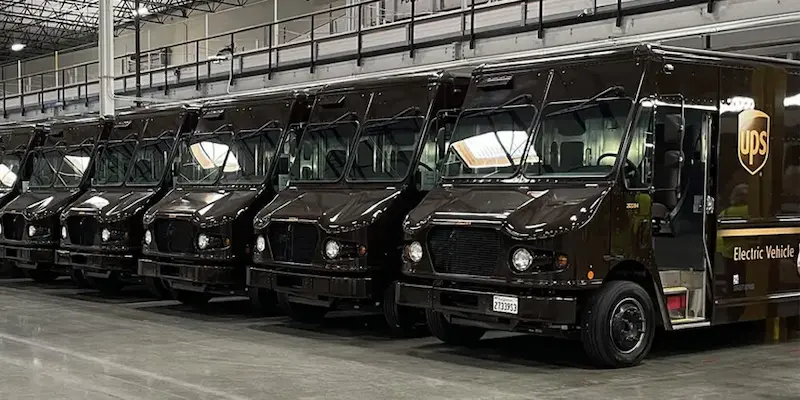
UPS found that their trucks lost most of their fuel waiting for the traffic signal. Through their Orion algorithm, they discovered that if their trucks were to take the free right turn following a slightly longer route, it would work wonders, as it did. It saved them 10 million gallons of fuel and $400 million a year in costs every year!
Fix Expensive Problems Early
Toyota's Andon Cord - This is a rope that runs across the assembly line that any worker across any of the segments (not just supervisors) could pull to instantly stop the entire production line if they spotted a defect or abnormality. This may seem counter-intuitive because it hurts efficiency, but the cost of preventing potential problems is far lower than bearing the cost of solving failures down the line. The main caveat of this method is 'empowerment'. No employee is ever under any circumstance is punished for pulling the cord. In fact, they are thanked, even if the defect turned out to be nothing.
Bypassing Chain of Command
Elon Musk instructed his employees to talk to whoever they need to talk to, in order to solve a problem, regardless of what department or rank they sit in. Corporations could hold skip-level meetings where upper management cuts across levels and directly speaks with junior employees. This eliminates the compound effect that I spoke of earlier.
Empower Employees
The Ritz-Carlton's $2,000 rule: The famed hotel chain authorises each of its employees - no exceptions - to spend up to $2,000 dollars per guest to solve a problem or to create a great experience; with no approval chain, permissions, or consequences. It eliminates the situation where employees may get stuck in when an angry customer wishes to escalate issues. All they can do is wait for the manager, not provide arbitrary generosity. They came up with the number by finding that an average guest spends approx. $250,000 with the brand over their lifetime.
Conclusion
Every organisation in this piece is really solving the problem of inefficiency, in a different manner. Shopify and Amazon shrink the number of people a decision has to move through. Ritz-Carlton and Toyota push the authority to act down to whoever is closest to the problem. UPS trusted an algorithm over instinct, and Musk bypassed the chain of command entirely - each one shortening the distance between an idea and the person who must build it and refusing to let 'good enough' quietly compound.
So let us not settle for good enough. Let us not relent in the face of adversity. By being sincere employees, focused and empowered to perform our task, we can do little things in a great way!
PS: I'd recommend going through the references; especially the piece on Ritz Carlton
Read more at kalkieshward.me/articles
References
Grammarly - The Workforce Productivity Trends That Define 2025
Talaera - The $1.2 Trillion Cost of Miscommunication in the Workplace (and How Managers Can Fix It)
Entrepreneur - ‘Meeting Culture’ Is Costing Companies $101 Million a Year
Gallup - State of the Global Workplace 2026
Forbes - This Company Is Canceling All Meetings With More Than Two Employees To Free Up Workers’ Time
Inc - How Jeff Bezos Used the 2-Pizza Rule to Put an End to Useless Meetings at Amazon
Forbes - The shortest distance between two points? At UPS, it’s complicated
Psych Safety - Psychological Safety: The Andon Cord
Forbes - Heroic Customer Service: When Ritz-Carlton Saved Thomas The Tank Engine